
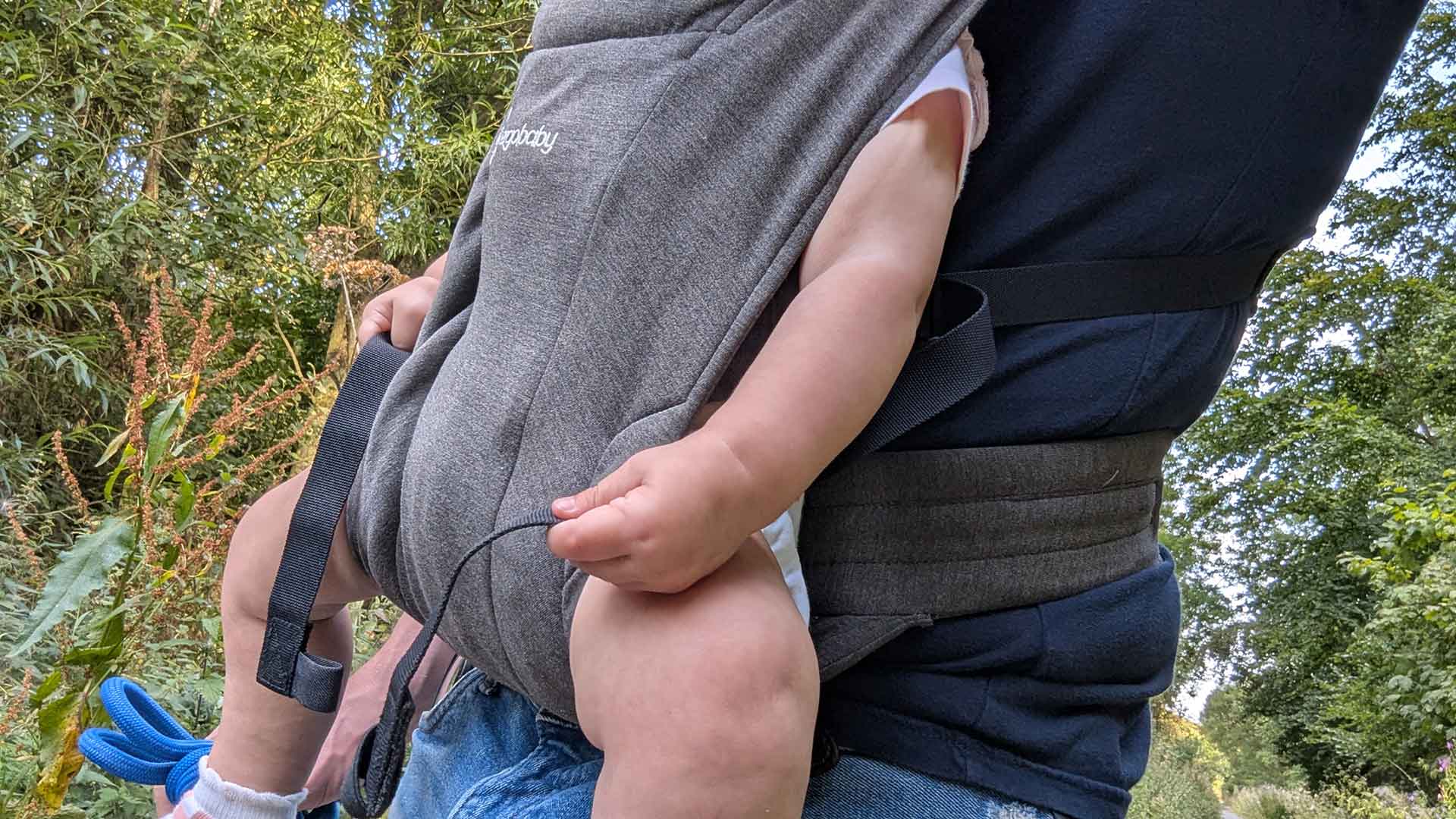
When you bring a baby home, navigating the world of baby transport is overwhelming.
Beyond the usual prams and pushchairs, hands-free carrying is also an essential.
They are the perfect way to soothe a newborn around the house, pop to the local shops, or take the dog for a quick walk.
However, the carrier that works brilliantly during the sleepy newborn stage quickly starts to show its limits as your baby grows, gains weight, and wants to see the world.
If you are torn between a soft front sling (like the Ergobaby Embrace) and a structured frame carrier (like the Littlelife Ranger), this guide breaks down everything you need to know.
Short Answer: Which One Do You Need?
If you are looking for a quick answer, it comes down to your baby’s age, weight, and developmental stage:
- Newborn to ~8 Months: Choose a Soft Baby Sling. It provides head/neck support that is essential but also keeps your baby snug against your chest, and is great if you’re inside and just simply need a pair of hands or to sort something out.
- 8 Months to Toddlerhood (3+ Years): Choose a Backpack Frame Carrier. It shifts the weight to your back, stops the body heat buildup, gives your baby a 360-degree view, and handles proper countryside walks.
Detailed Feature Comparison
| Feature | Soft Baby Sling (e.g., Ergobaby Embrace) | Backpack Frame Carrier (e.g., Littlelife Ranger) |
| Best For | Newborns & early months (0–8 months) | Older babies & toddlers (8–36 months) |
| Primary Carry Position | Chest-to-chest (Front inward/outward) | Back carry (High seating position) |
| Weight Distribution | Shoulders & upper back | Hips, shoulders & lower back |
| Storage & Bulk | Ultra-compact (rolls up into a change bag) | Rigid metal frame (requires boot space) |
| Overheating Risk | High (skin-to-skin body heat transfer) | Low (built-in air gap between adult and baby) |
| Leg & Hip Clearance | Legs wrap around adult waist/thighs | Elevated leg stirrups/dangle clearance |
| Loading Difficulty | Easy (slide baby in while wearing) | Requires grounding (foot anchor needed) |
| Average Retail Price | £70 – £90 | £120 – £150 (New) / £40–£50 (Vinted) |
The Early Months: Why the Soft Sling Rules
During the early months, your baby’s needs are simple: closeness, head support, and warmth.
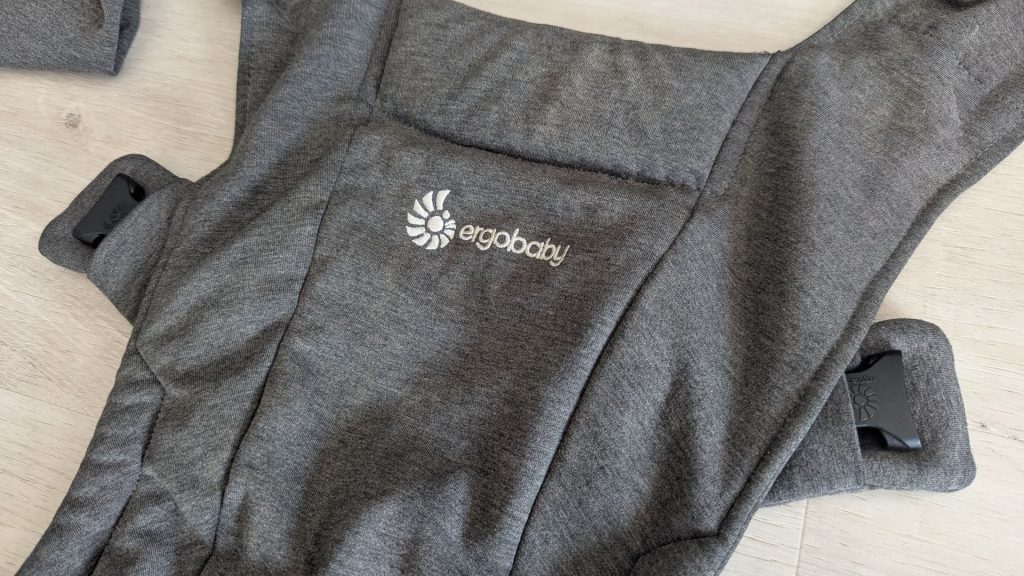
This is where a soft, structured wrap-style carrier like the Ergobaby Embrace shines.
Newborn Comfort
Newborns lack the muscle strength to hold up their heads, making more rigid backpack carriers unsuitable.
Soft slings hold your baby in the recommended “M-shape” (or frog) position, keeping their hips safe while gently supporting the “C-curve” of their spine.
Versatility & Housework
A soft sling isn’t just for countryside dog walks.
It is a sanity saver for those impossible inside jobs.
When baby is going through a clingy phase, putting them into a front sling allows you to keep them calm while keeping your hands free to make a drink, clean the kitchen, answer an email.
Packability & Convenience
One of the biggest advantages of a soft sling is how nicely it folds away. Ours lives in a draw in the kitchen. It also easily rolls up and can be put in your main changing bag without taking up much space for nappies, wipes etc.
When & Why the Sling Starts to Struggle
Around the 7 to 9-month mark, we started to struggle with our sling. Our baby got to around 8-9kg, and her legs started to grow.
Issue 1: The “Human Radiator” Effect
Slings obviously keep your baby strapped flush against your chest, no matter if she is forward or rear facing. Over a warm summer (like the one we’ve just had) or during anything more than a local around the block walk, you end up trapping body heat between you.
By the end of a 30-minute walk, both you and baby end up sticky, sweaty, and uncomfortable.
Issue 2: Thigh Interference
As our baby’s legs got longer, carrying her on my front simply became awkward.
With every step I take, her feet and lower legs knock against my thighs.
It dissrups your natural walking pattern and became annoying on longer dog walks.
Issue 3: Front Weight Strain
Put simply, carrying 9 kg on your front pulls on your shoulders and upper back.
Fine for a 10-minute walk along the street.
But carrying that weight on your front for half an hour causes, back ache.
Introducing the Backpack Carrier
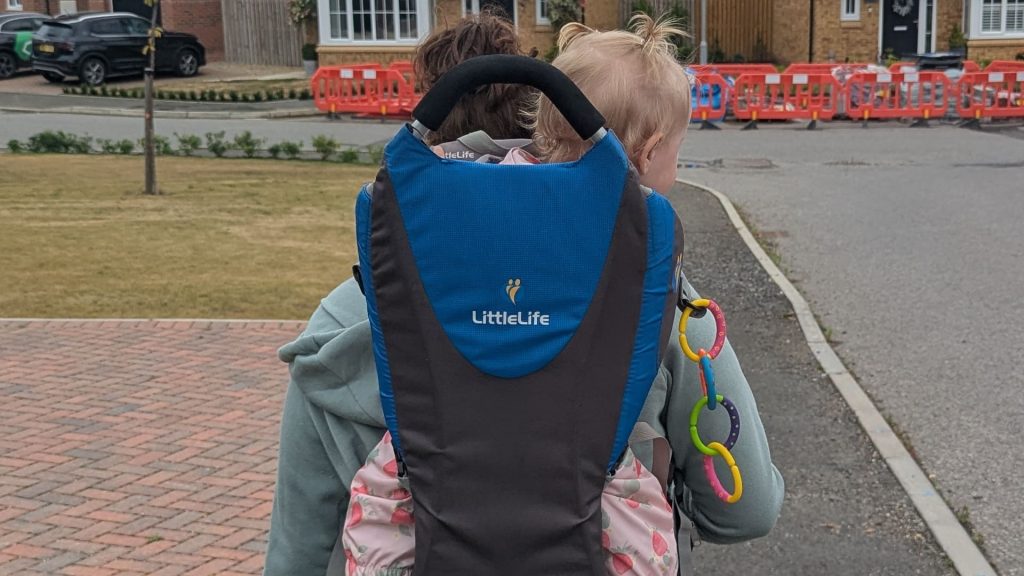
Once our developed solid neck control and could sit up unassisted ( around 7–8 months), switching to a structured frame carrier like the Littlelife Ranger transformed our walking experience.
Superior Weight Distribution
Backpack carriers use an internal or external aluminum chassis to shift the bulk of your baby’s weight off your shoulders and down onto your hips and back.
Carrying 9 kg to 15 kg on your back feels significantly lighter and more natural than carrying that same weight on your chest.
Air Flow & Temperature Control
Unlike slings, frame carriers hold your baby slightly off your back in their own space.
This creates a physical air gap between parent and child, allowing air to circulate and stopping the sweaty t-shirt problem.
The 360-Degree View
At 10 our baby started to become curious about the world around her. Sitting up high at my shoulder level gives her a full view of the world behind my head. She can spot dogs (mostly spotting dogs), watch the trees and wave at people.
Real-World Testing: Dog Walks, Supermarkets & Hiking
Choosing between a baby sling vs backpack carrier often comes down to where you spend most of your time.
Quick Supermarket Trips & Local Errands
- Winner: Soft Sling
- Why: Unfolding a large frame carrier just to pop into ASDA or Sainsbury’s is overkill and looks stupid. A soft sling can be slipped on in the car park.
Daily Dog Walks
- Winner: Backpack Carrier
- Why: Managing a leash, picking up after your dog, and watching your steps across a muddy park path is easier when your baby is strapped to your back.
Hiking & Countryside Trails
- Winner: Backpack Carrier
- Why: If you enjoy proper walking trails, a frame carrier is what you need. The rigid chaise and stable harness system, handles uneven terrain while keeping both you and your baby comfortable over longer distances.
Budget & Buying Strategy: How to Save Cash
Baby gear adds up quickly, but you don’t need to spend hundreds of pounds to get a dual-carrier setup that lasts.
The Smart Second-Hand Route
Framework carriers like the Littlelife Ranger S2 at new, cost £129.99+.
However, because parents often buy them for specific holidays and barely use them, the second-hand market like on Vinted or Facebook Marketplace are packed with decent examples.
Picking up a second-hand frame carrier for £45–£50 could save you around £80, which is a tank and a half of petrol in your family car.
Sanitizing Second-Hand Gear
If you buy a pre-owned gear online, cleaning it is simple:
- Strip off all removable fabric pads and harness covers, then run them through a standard 30°C washing machine cycle.
- Wipe down the fixed straps, headrest, and aluminum frame using anti-bacterial wipes.
- Leave it to air-dry completely outdoors before your first walk.
Final Verdict & Recommendation
You don’t necessarily have to pick one forever, think of them as two tools for two stages of your parenting journey:
- Start with a soft front sling for the first 6 to 8 months. It gives your newborn the comfort, warmth, and head support they need while keeping early outings light and simple.
- Upgrade to a backpack frame carrier around 8 months. As your baby grows past 8 kg, the back-mount weight distribution, air flow, and elevated seating position make outdoor adventures far more enjoyable for everyone involved.